My work
On this page, you will find a selection of my work – work, my day job so to speak.
I’m lucky enough to have been able to weave together a lifetime of curiosity spanning many themes and interests, into a professional practice that not only sustains but amplifies these passions.
With Wonderland, a Vienna-based non-profit specializing in participatory urbanism and co-creation, I contribute to funded EU projects that re-imagine mobility, public space, renewable energy and ecological transformation across Europe. By integrating artistic research, Urban Living Labs, and policy advocacy, Wonderland empowers communities to shape inclusive, sustainable, and socially just built environments.
Through X-arts, a Vienna-based non-profit project incubator, I develop films, documentaries, and participatory art projects such as BioYouToon, Art and Nature Walks, and CHAC: that foster community building, knowledge creation, and capacity building through workshops, storytelling, and public engagement. X-arts collaborates with EU-funded programs and local partners to create spaces for dialogue, skill-sharing, and collective action.
The examples below reflect my commitment to co-creating platforms where art, research, and activism intersect to inspire participation and imagine more inclusive futures.
Fair Mobility
Including women and gender minorities in the transformation of mobility in rural areas
Fair Mobility is an EU-funded project that aims to transform mobility and accessibility frameworks in a sustainable and inclusive way, focusing on women and gender minorities. The project has developed and tested inclusive mobility tools to improve accessibility, equity of mobility and sense of safety in two pilos areas: Creil, France, and Ebensee, Austria.
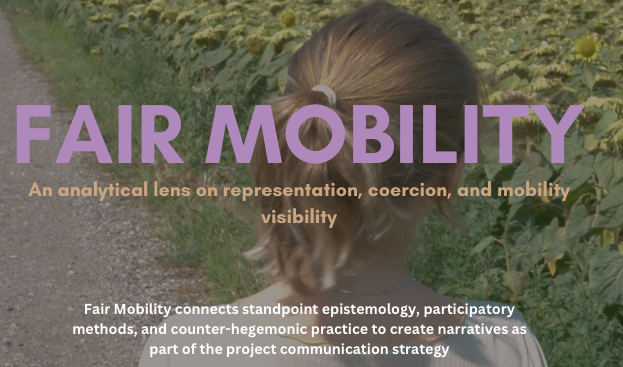
Alongside basic communication, work for the project included transforming analytical research into video essays, co-creating films with Ebensee residents to highlight lived experiences. By framing mobility as a site of ideological reproduction (where fear, exclusion, and normalization reinforce inequity) I employed artistic research to amplify community knowledge. This approach reflects my broader practice: using film and storytelling to question hegemonic narratives and foster collective agency in redefining equitable systems.
The process prioritized co-creation, positioning participants as co-researchers whose embodied expertise drives both critique and solutions. to view the films, click here.
Bioyoutoon
BioYouToon is an Erasmus funded international cooperation project that uses comics and webtoons to raise awareness about biodiversity conservation among young people.
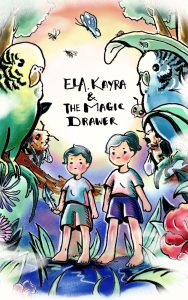
By merging art, storytelling, and science, the project transforms complex ecological concepts into engaging, accessible narratives that inspire action and curiosity.
Through workshops, training modules, and collaborative toolkits, participants developed original stories and illustrations that explore themes like species conservation, urban ecosystems, and human-nature relationships. You can access the outputs of the project here.
POSEIDON
POSEIDON is a collaborative EU initiative designed to facilitate the transformation of existing urban districts into Positive Energy Districts (PEDs) by integrating energy, environmental, and social dimensions of sustainability. The project focuses specifically on Mediterranean cities, which share not only similar climatic conditions but also common cultural practices and social structures.
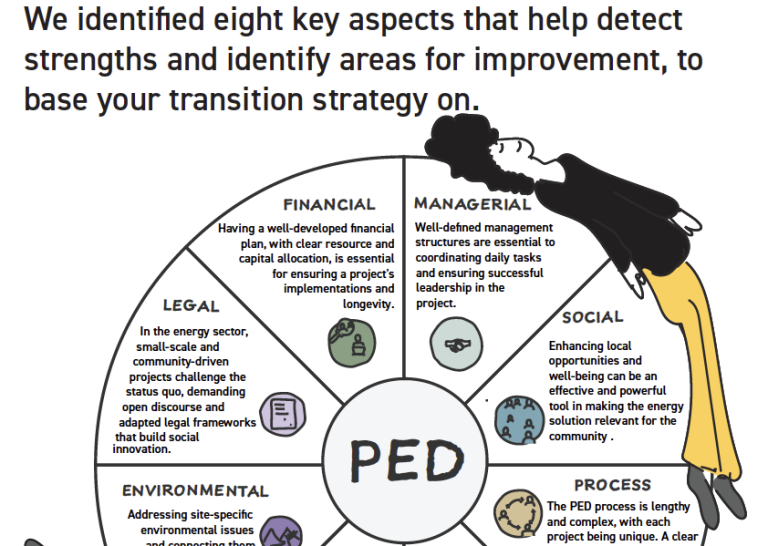
Within this framework, I contribute by aiding the designing and implementing Urban Living Labs, as well as developing methodologies, exhibitions, and films that engage communities in co-creating their energy futures. Wonderland’s (hence my) role emphasizes participatory approaches and artistic research to translate technical challenges into accessible, actionable narratives—empowering residents, municipalities, and stakeholders to collaboratively shape resilient and inclusive energy systems.